In Mauritius, plastic bottles are easy to buy and harder to recover.
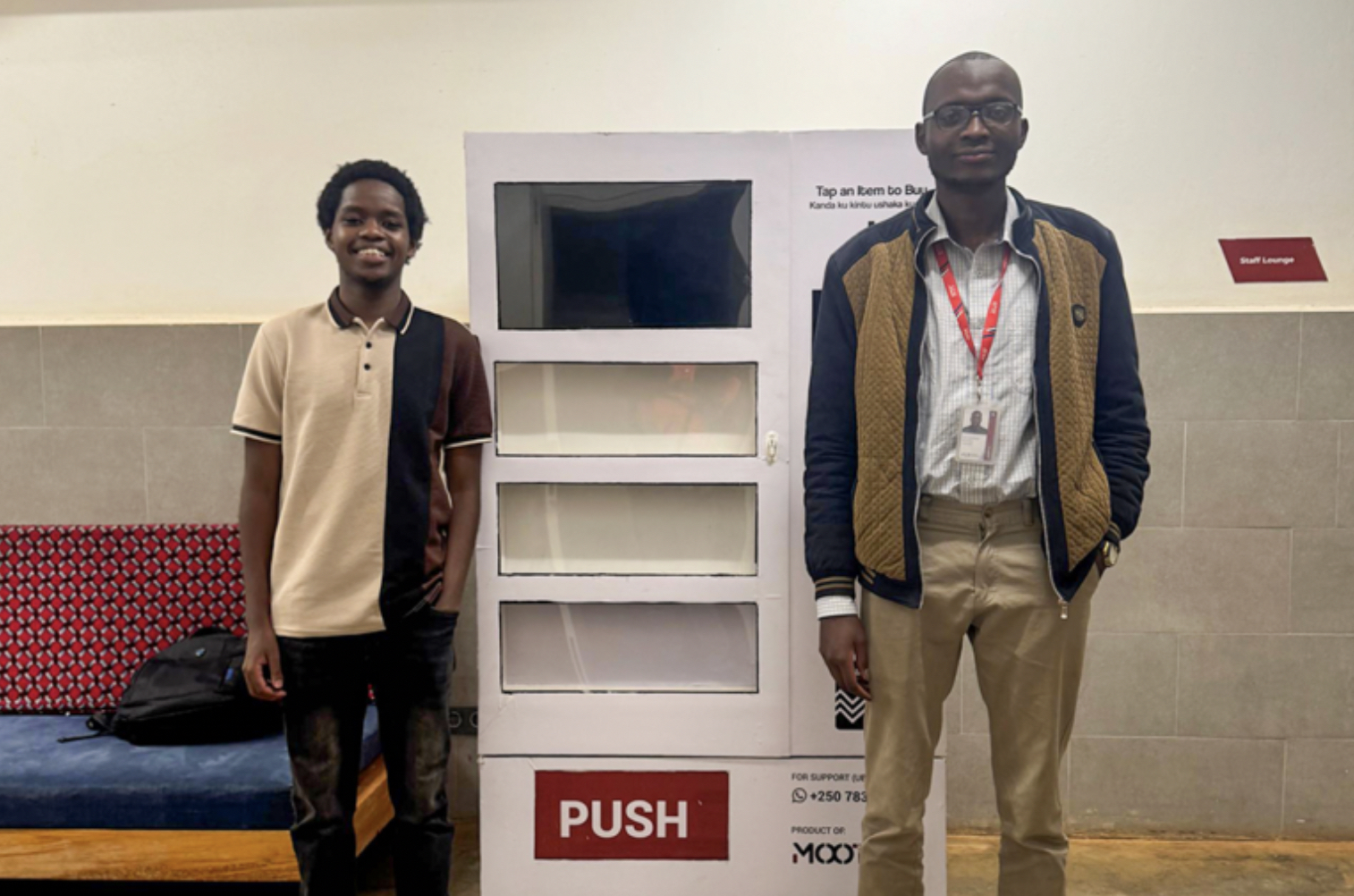
Roughly 100 million plastic bottles are sold in the country each year, yet fewer than half are recovered. For Kimunila Zhakata from Zimbabwe and Brian Mwololo from Kenya, both Computer Science students at the African Leadership College of Higher Education, the problem was not only environmental. They identified a behavioural gap: recycling was not built into the everyday experience of buying a drink.
Mauritius’ existing collection points were neither located at points of sale nor designed to offer customers a reward for returning their bottles. SmarVe was designed to address both gaps: a smart vending machine that doubles as a bottle return point, allowing customers to buy a drink, return the empty bottle on the spot, and receive 15% off their next purchase.
Optimizing for Everyday Behaviour
SmarVe is built around a simple loop: a customer buys a drink from the machine, returns the empty bottle at the same point, receives 15% off their next purchase, and collectors are notified when bins are full.
The strength of the model lies in its convenience. Instead of expecting users to find a separate recycling point, SmarVe places the return system where the purchase happens. By connecting the act of buying with the act of returning, the venture makes recycling part of an everyday routine rather than an additional task.
Testing a More Convenient Return System
SmarVe is already showing early promise. Before incentives were introduced, the venture achieved a 47.8% return rate, above Mauritius’ national average return rate of 43%. Once incentives go live, the team projects a return rate of 62%.
These figures point to the potential of a system designed around how people actually behave. The machine does not only collect bottles; it tests whether easier access and immediate rewards can shift habits at scale.
Built by ALCHE Students, Validated in Mauritius
For Kimunila and Brian, SmarVe reflects the kind of practical innovation that begins with observing a familiar problem closely. Their work combines technology, environmental responsibility, and user behaviour to address a challenge visible across Mauritius.
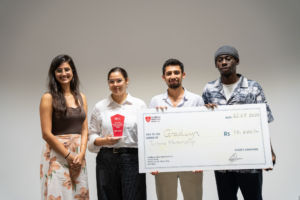
Their venture has already gained recognition beyond campus, earning 2nd runner-up at the 2026 Africa Business Concept Challenge. Now, the team is building on its pilot in Mauritius, exploring new partnerships and opportunities to expand SmarVe’s deployment.
The ALU Philosophy
Across Africa, many of the most useful innovations begin by improving the systems people interact with every day.
At African Leadership University, students are encouraged to move from observation to action: to test ideas, build within context, and design solutions that respond to real needs. SmarVe reflects that approach. It turns a common problem into a practical system, showing how student-led ventures can help reshape everyday behaviour while contributing to a more circular economy.